
Dot-to-dot puzzles, also known as connect-the-dots puzzles, have entertained and educated people of all ages for generations. From helping preschoolers learn to count to providing adults with relaxing brain-training activities, these puzzles combine creativity, learning, and fun in a single activity.
Today, creating your own personalized dot-to-dot puzzle is easier than ever. With modern online tools, you can transform almost any photo or illustration into a printable puzzle in just a few clicks.
In this guide, you’ll discover the benefits of dot-to-dot puzzles, explore the different types available, and learn how to create your own custom connect-the-dots puzzle.
What Is a Dot-to-Dot Puzzle?
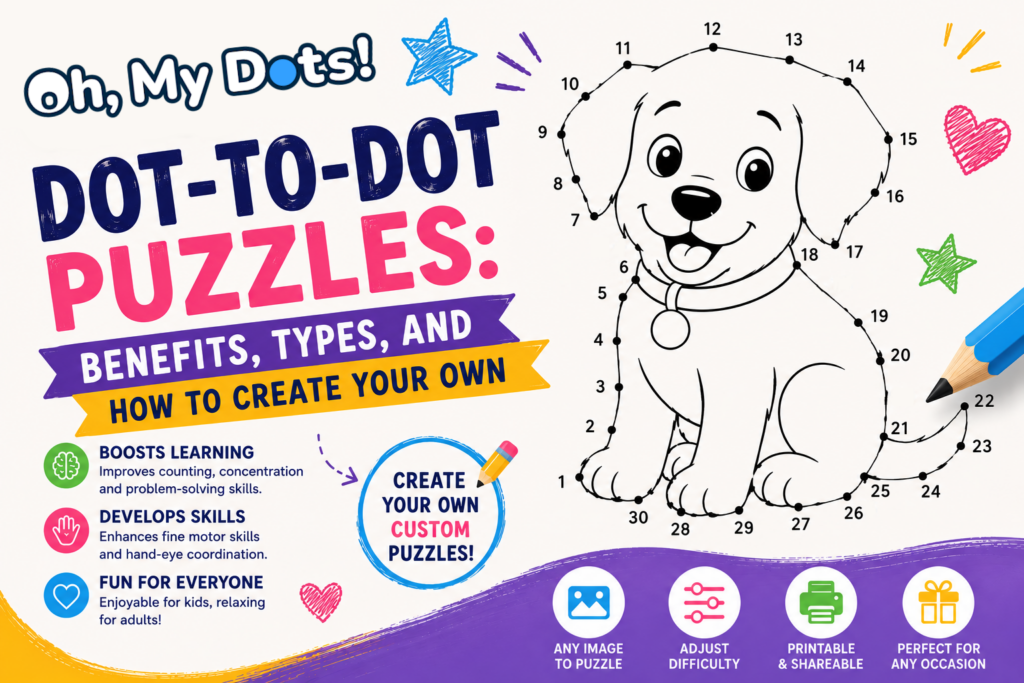
A dot-to-dot puzzle consists of a series of numbered or lettered dots that, when connected in the correct order, reveal a hidden picture.
The objective is simple:
- Start with the first dot.
- Connect each dot in sequence.
- Continue until all dots are joined.
- Watch the hidden image appear.
The final image can be almost anything—from animals and vehicles to famous landmarks, portraits, or custom photographs.
Because they combine drawing, counting, and problem-solving, dot-to-dot puzzles are both educational and entertaining.
The Benefits of Dot-to-Dot Puzzles
Improves Concentration and Attention
Following a sequence of numbers requires focus and patience. Completing a puzzle helps children and adults practice sustained attention while working toward a rewarding goal.
Develops Fine Motor Skills
Connecting dots with a pencil or stylus strengthens hand muscles and improves hand-eye coordination. For young children, this is excellent preparation for handwriting.
Reinforces Number Recognition
Numbered dot-to-dot puzzles encourage children to recognize numbers and understand numerical order naturally through play.
More advanced puzzles can even reinforce skip counting, multiplication, or sequencing skills.
Encourages Problem Solving
As puzzles become more detailed, participants learn to identify patterns, work methodically, and stay organized.
Boosts Creativity
One of the most enjoyable moments is discovering the hidden image as the puzzle comes together. Many people enjoy coloring the completed picture afterward, adding another creative element to the activity.
Provides Screen-Free Entertainment
Dot-to-dot puzzles are a fantastic alternative to screen time. Whether at home, in the classroom, or while traveling, they offer an engaging activity that requires nothing more than a printed worksheet and a pencil.
Dot-to-Dot Puzzles for Different Ages
Preschool (Ages 3–5)
Simple puzzles with 10–20 dots help children:
- Learn numbers
- Improve pencil control
- Develop confidence
Elementary School (Ages 6–10)
Children enjoy puzzles with 20–100 dots featuring:
- Animals
- Dinosaurs
- Vehicles
- Cartoon characters
- Holiday themes
These puzzles reinforce counting and concentration while keeping learning fun.
Older Children
More detailed puzzles containing 100–150 dots offer a greater challenge and help develop patience and attention to detail.
Adults
Many adults enjoy complex connect-the-dots puzzles with hundreds or even thousands of dots. These intricate designs can be both relaxing and mentally stimulating, making them a popular hobby for puzzle enthusiasts.
Types of Dot-to-Dot Puzzles
There are many variations of connect-the-dots puzzles, each offering a unique challenge.
Number Dot-to-Dot
The classic version uses numbers in ascending order and is suitable for learners of all ages.
Alphabet Dot-to-Dot
Instead of numbers, participants connect letters of the alphabet. This variation helps young children practice letter recognition and alphabetical order.
Skip Counting Dot-to-Dot
These puzzles require connecting every second, fifth, or tenth number, making them ideal for reinforcing multiplication and counting patterns.
Extreme Dot-to-Dot
Designed for experienced puzzlers, extreme puzzles may contain hundreds or thousands of dots that gradually reveal highly detailed artwork.
Custom Dot-to-Dot Puzzles
Modern puzzle generators allow you to upload your own image and automatically convert it into a personalized dot-to-dot puzzle. This makes it possible to create unique puzzles featuring family photos, pets, logos, landmarks, or artwork.
Creative Uses for Personalized Dot-to-Dot Puzzles
Custom dot-to-dot puzzles are perfect for many occasions.
Classroom Activities
Teachers can create puzzles related to:
- Science topics
- Historical figures
- Geography
- Holidays
- Reading assignments
Homeschool Lessons
Parents can reinforce counting and observation skills with personalized worksheets tailored to their child’s interests.
Birthday Parties
Turn a favorite character, pet, or birthday photo into a fun activity for guests.
Personalized Gifts
A custom dot-to-dot puzzle made from a family photo or special memory is a unique and thoughtful gift.
Puzzle Books
Many creators use custom puzzles to design printable activity books for personal use or publishing.
How to Create Your Own Dot-to-Dot Puzzle
Creating a personalized connect-the-dots puzzle is surprisingly simple using the Oh, my Dots! connect the dots generator.
Step 1: Choose an Image
Select a clear image with a recognizable outline. Good choices include:
- Animals
- Portraits
- Buildings
- Logos
- Simple illustrations
Images with strong contrast generally produce the best results.
Step 2: Upload the Image
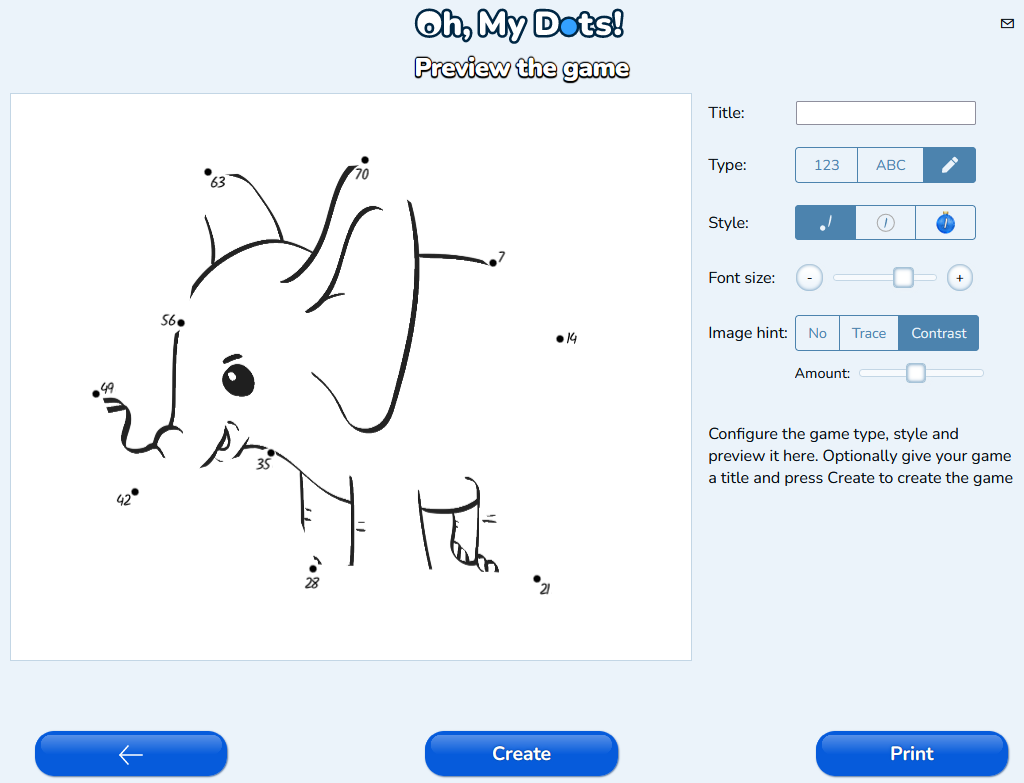
Upload your image to a dot-to-dot puzzle generator. The software automatically detects the outline and places numbered points around the shape.
Step 3: Adjust the Difficulty
Customize the puzzle by selecting the number of dots.
- Fewer dots create easier puzzles for young children.
- More dots produce greater detail and a more challenging experience.
Many generators also allow you to adjust line smoothness, point spacing, and puzzle complexity.
Step 4: Preview the Puzzle
Before downloading, preview the generated puzzle to ensure the image is recognizable and the difficulty matches your audience.
Step 5: Download and Print
Once you’re happy with the result, download the puzzle and print it for use at home, in the classroom, or at special events.
Printable vs Online Dot-to-Dot Puzzles
Both formats have advantages.
Printable Puzzles
Perfect for:
- Schools
- Homeschooling
- Travel
- Waiting rooms
- Screen-free activities
Online Puzzles
Ideal for:
- Tablets
- Interactive learning
- Instant sharing
- Remote education
Many creators enjoy offering both options to reach a wider audience.
Frequently Asked Questions
What’s the difference between dot-to-dot and connect-the-dots?
Nothing. The terms are used interchangeably and refer to the same type of puzzle.
Can I create a dot-to-dot puzzle from my own photo?
Yes. Modern dot-to-dot generators can convert photos, drawings, and illustrations into personalized puzzles automatically.
Are dot-to-dot puzzles educational?
Absolutely. They help develop counting skills, concentration, fine motor coordination, and visual perception while making learning enjoyable.
Can adults enjoy dot-to-dot puzzles?
Definitely. Many adult puzzles feature intricate designs with hundreds or thousands of dots, providing a relaxing and rewarding challenge.
Start Creating Your Own Dot-to-Dot Puzzles
Whether you’re a teacher looking for engaging classroom activities, a parent planning a fun learning exercise, or a puzzle enthusiast searching for a creative hobby, personalized dot-to-dot puzzles offer endless possibilities.
With an online dot-to-dot generator, you can transform your favorite photos and illustrations into printable puzzles in minutes. Create educational worksheets, memorable gifts, party activities, or unique puzzle books. All with just a few clicks.
Start creating your own custom dot-to-dot puzzle today and discover how easy it is to turn any image into an engaging puzzle that people of all ages will enjoy.