
If you want to create your own Music Puzzle games, you can try them on Oh, my Dots.
TL;DR
A Music Puzzle is a game where a song is split into short audio segments, and players must rearrange them in the correct order, like a jigsaw puzzle, but with sound instead of shapes. It combines music listening, memory, and logical thinking into a fun and educational experience.
You can create your own Music Puzzle easily using Oh, my Dots! by uploading a picture and a song, selecting puzzle pieces, adjusting audio segments, and sharing your game online.
Music Puzzles are great for learning, entertainment, and creative expression, and they work for all ages: from beginners to music enthusiasts.
What Is a Music Puzzle? A Fun New Way to Play With Music
Music and puzzles are two types of entertainment that people have enjoyed for generations. Music can make us emotional, energetic, relaxed, or nostalgic, while puzzles challenge our brains and reward us with the satisfaction of solving problems. A Music Puzzle combines both experiences into one unique game.
A Music Puzzle is similar to a traditional jigsaw puzzle, but instead of matching pieces by shape or color alone, players also use their ears. Each puzzle piece contains a short segment of music, and the goal is to place every piece in the correct order based on how the song sounds.
The result is a surprisingly fun challenge that tests musical memory, listening skills, rhythm recognition, and concentration.
Unlike many music games that focus on speed or rhythm tapping, Music Puzzles are more about careful listening and logical thinking. Players listen to short musical phrases and try to determine where they belong in the full song. Even familiar songs can become surprisingly challenging when they are broken into small pieces.
This type of game works for children, students, teachers, musicians, and casual players alike. It can be educational, relaxing, competitive, or simply entertaining.
How a Music Puzzle Works
A Music Puzzle usually starts with a picture that is divided into multiple pieces. Behind each piece is a short audio clip taken from a song.
When players click or tap a piece, they hear the corresponding music segment. Their task is to arrange the pieces in the correct order so that the music flows naturally from beginning to end.
The challenge comes from identifying melody progression, rhythm changes, musical phrases and other song aspects. Players often discover that music contains recognizable “sentences” or phrases, much like spoken language. A melody may begin with tension and resolve later, helping the player understand where it belongs in the sequence.
Some Music Puzzles are easy and use very distinct musical sections. Others are much harder and use songs with repeating melodies or subtle transitions.
Why Music Puzzles Are So Engaging
One reason Music Puzzles are interesting is that they activate multiple senses and cognitive skills at the same time.
Traditional puzzles mainly rely on visual processing. Music games usually focus on timing and reflexes. Music Puzzles combine listening, memory, pattern recognition, and visual organization into a single experience.
This creates a different type of gameplay that feels fresh and rewarding.
Many players also enjoy the emotional connection that music creates. Solving a puzzle using a favorite song feels more personal and immersive than solving a standard picture puzzle.
Music Puzzles can also become social activities. Friends or family members may work together to recognize parts of a song and debate where each segment belongs.
Educational Benefits of Music Puzzles
Music Puzzles are not only entertaining but can also support learning and cognitive development.
1. Improves Listening Skills
Players learn to focus carefully on details within the music. Small differences in melody, timing, or instrumentation become important clues.
2. Strengthens Memory
Remembering where musical phrases belong exercises short-term and long-term memory.
3. Encourages Musical Awareness
Even players without formal music training begin to notice musical structure, repetition, and phrasing.
4. Supports Music Education
Teachers can use Music Puzzles to help students learn:
- Song structure
- Musical phrases
- Classical music themes
- Instrument recognition
- Rhythm patterns
5. Increases Concentration
Because players must listen attentively, Music Puzzles encourage focus and patience.
Who Can Enjoy Music Puzzles?
One of the best things about Music Puzzles is their flexibility. They can be adapted for many age groups and interests.
Children
Kids enjoy the combination of pictures, sounds, and interactive gameplay. Simple songs with recognizable melodies work especially well.
Families
Families can solve puzzles together and turn familiar songs into collaborative games.
Teachers
Educators can create custom puzzles for classroom activities or music lessons.
Musicians
Musicians may enjoy the challenge of identifying subtle transitions or harmonic changes.
Casual Players
Even people with no musical background can enjoy Music Puzzles because they rely mostly on intuition and listening.
Types of Songs That Work Best
Almost any song can become a Music Puzzle, but some songs work better than others. Songs with clear musical phrases and changing melodies are usually easier and more enjoyable. Instrumental songs are usually harder as you cannot use the lyrics to guide you through the song. Additionally, songs that “everybody knows” tend to be easier. Songs with highly repetitive beats or very similar sections without clear distinctions may create more difficult puzzles. When selecting a song, consider your audience and the desired difficulty.
Good choices include:
- Pop songs with distinct sections
- Children’s songs
- Folk songs
- Classical music or Movie soundtracks
How to Create a Music Puzzle
Step-by-Step Tutorial: Create Your Own Music Puzzle
Creating a Music Puzzle is easier than many people expect. Platforms like Oh, my Dots! allow users to create and share their own puzzles online for free.
Open Oh, my Dots!

In you browser type “oh my dots” or simply click on this link: Oh, my Dots! (https://www.ohmydots.com)
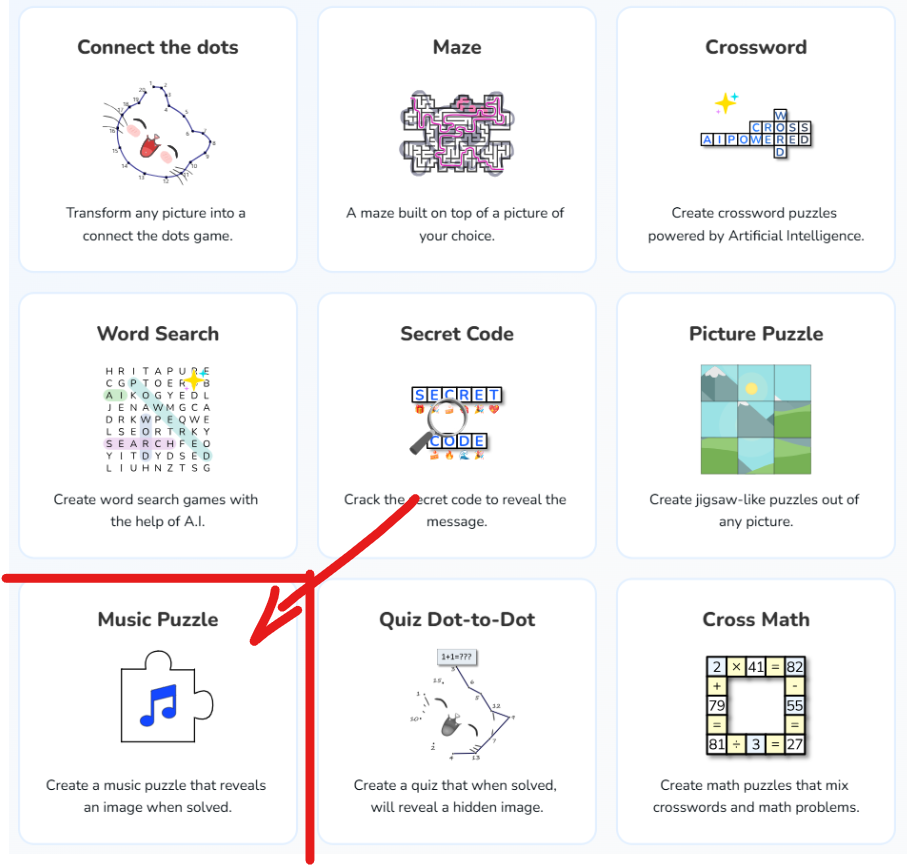
Open the Music Puzzle Creator

At Oh, my Dots!, press Create a Game and select the Music Puzzle option.
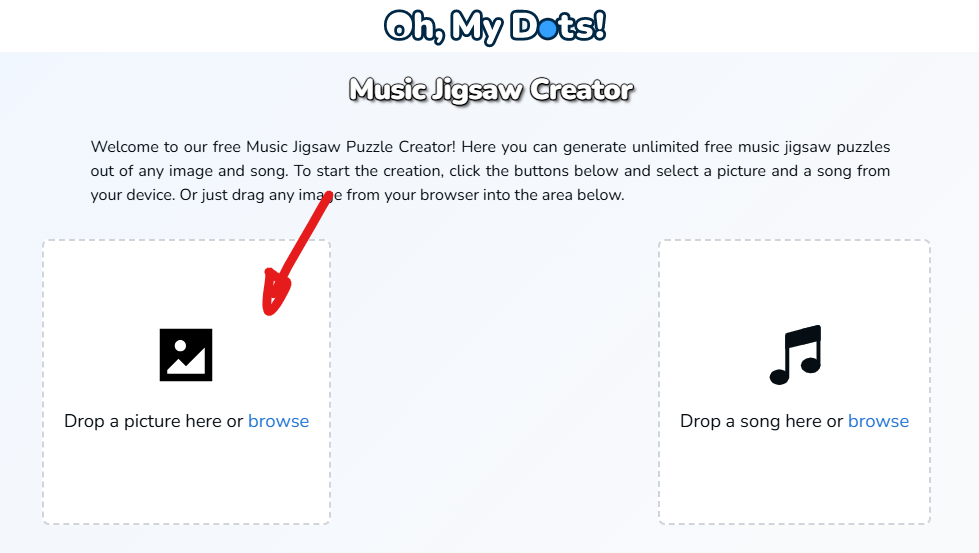
Choose a Picture

Select an image that matches the mood or theme of the music. You can upload a picture from your device or drag an image directly into the upload area.
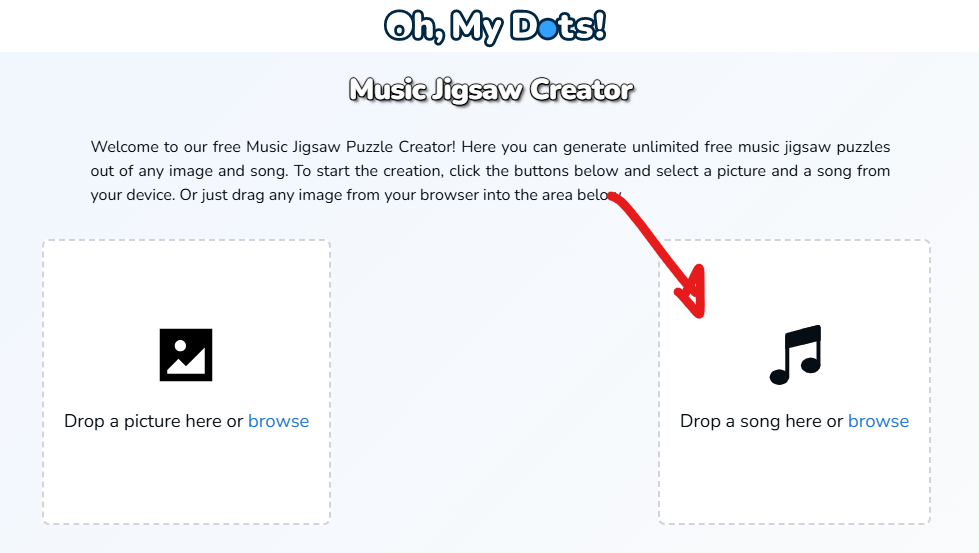
Upload a Song
Next, press the music note button to upload the song you want to use.
Choose songs that have:
* Distinct melodic phrases
* Clear transitions
* Good audio quality
Crop the Image

Adjust the image in needed then press Next. A square or moderately wide image usually works best for mobile phones, tablets, and laptops.
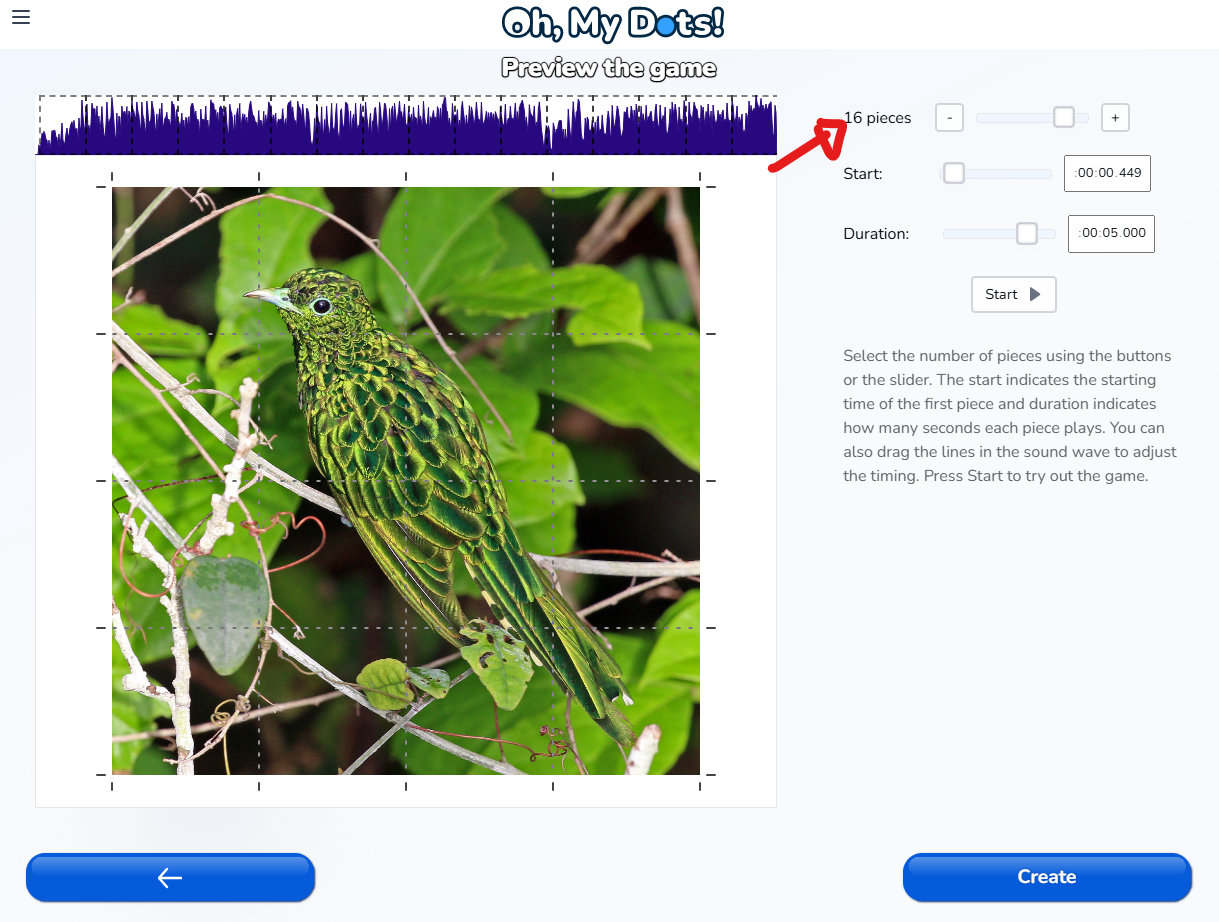
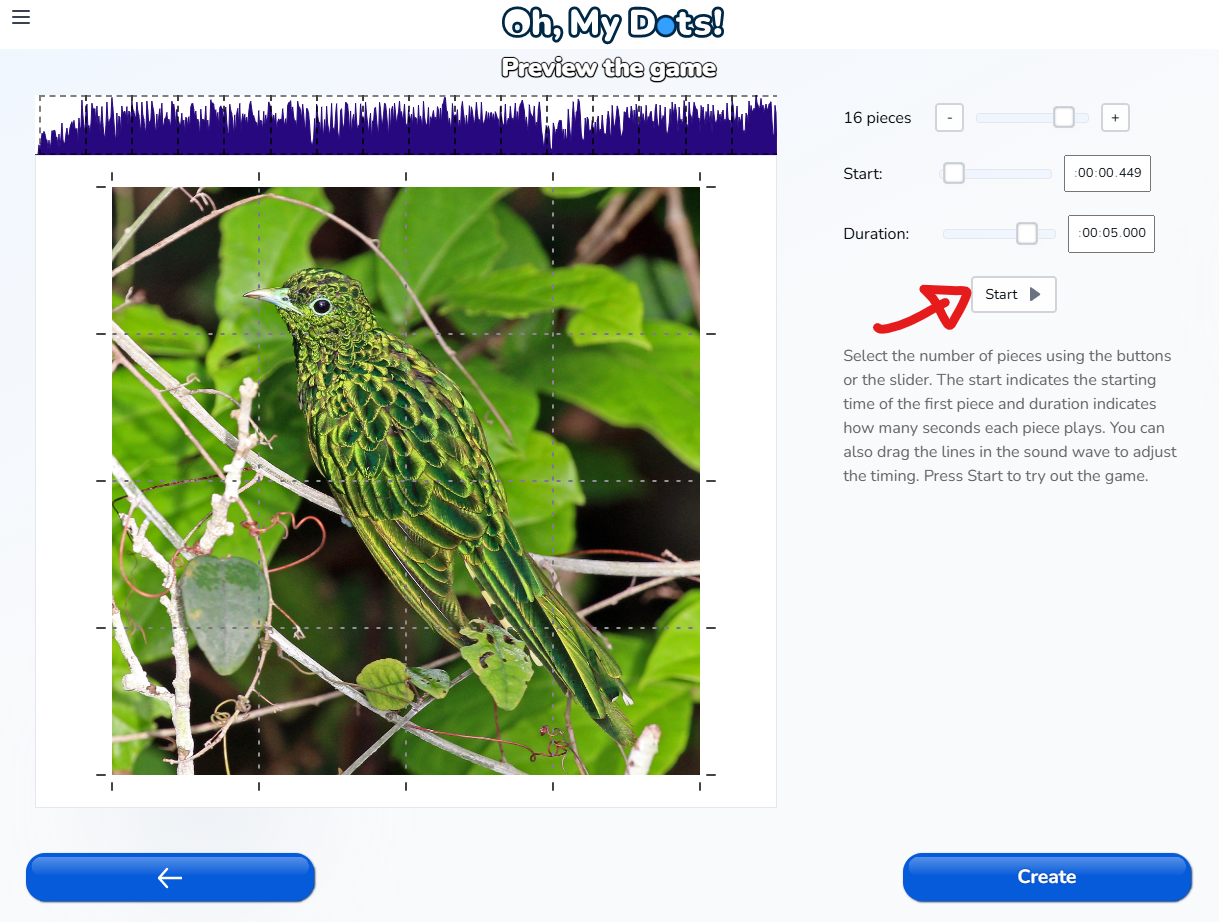
Select the Number of Puzzle Pieces

Choose how difficult you want the game to be.
Beginners should start with fewer pieces.
Adjust the Music Segments
This is one of the most important steps. Each puzzle piece corresponds to a short section of the song. Use the waveform editor to determine where the first piece starts and how long each segment lasts.
Good puzzle segments usually contain complete musical phrases rather than random fragments.
Many creators use segments that last one or two musical measures.
Test the Puzzle
Before publishing the game, press the Start button to play it yourself. Ask questions like:
* Are the music segments distinct enough?
* Is the difficulty balanced?
* Does the puzzle feel fun rather than frustrating?
Small timing adjustments can make a huge difference.
Save and Share
Once you are satisfied, press Create to save the puzzle and give it a title.




Result
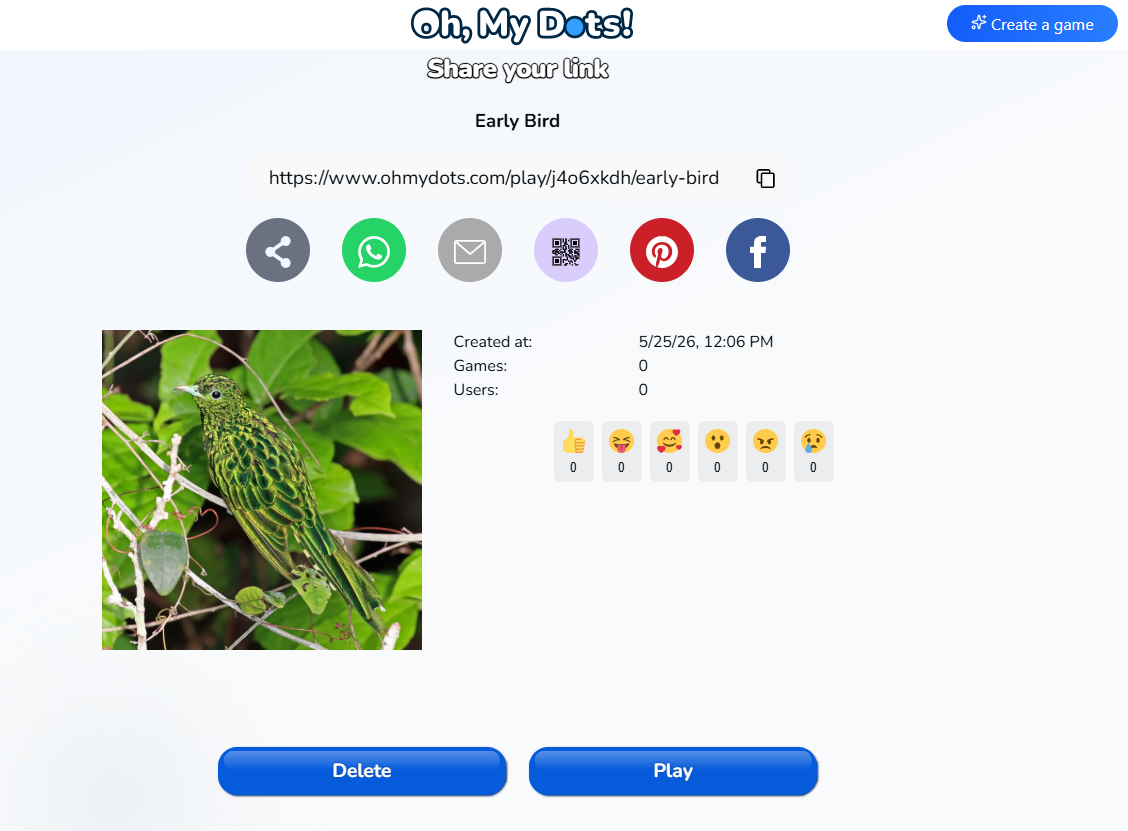
Congratulations! You’ve created your first Music Puzzle. You can then share the game using a direct link or social media.
Tips for Making Better Music Puzzles
Use Recognizable Music
Songs with memorable melodies create more satisfying gameplay.
Avoid Extremely Short Segments
Very short clips may sound confusing or too similar.
Balance Difficulty
A puzzle should challenge players without making them frustrated.
Test on Different Devices
Make sure the puzzle works well on mobile phones and desktop computers.
Match the Picture to the Music
A good image enhances the overall experience and atmosphere.
The Future of Interactive Music Games
Music Puzzles represent an interesting direction for interactive entertainment. Instead of focusing only on fast reactions or competitive gameplay, they encourage attentive listening and creative thinking.
As online game creation tools become more accessible, more people can experiment with custom music-based experiences without needing programming knowledge.
This opens exciting possibilities for:
- Education
- Music appreciation
- Creative storytelling
- Brain-training games
- Classroom activities
- Family entertainment
Because Music Puzzles combine sound, visuals, and logic, they offer something that feels both familiar and completely new.
Final Thoughts
A Music Puzzle transforms listening into an interactive challenge. By combining music with puzzle-solving, it creates a game that is creative, educational, and genuinely fun.
Whether you are a teacher, musician, parent, or puzzle fan, creating a Music Puzzle can be a rewarding experience. You do not need advanced technical skills or music theory knowledge to get started.
With tools like Oh, my Dots, anyone can create and share their own musical puzzle games in just a few minutes.
If you enjoy music and puzzles, a Music Puzzle might become your next favorite type of game.